There’s a reason children are more interested in the cardboard box than whatever came inside it.
That box can be a rocket, a den, a car or a house. It can be crushed, climbed into, banged or stroked. For a young child, it’s endlessly interesting precisely because nobody has told them what it’s for.
This is the idea behind loose parts: objects with no fixed purpose and no instructions.
Pebbles, shells, cones, rope, fabric, planks, containers, blocks and, yes, cardboard boxes.
Things children can move, combine, stack, carry and take apart in whatever way occurs to them.
Reasons to use ‘loose parts’

Children think for themselves
Loose parts put children in charge of their own play. There are no right answers and no wrong ways to do it.
That freedom is exactly what allows children to explore, experiment and think for themselves, learning directly from their own experience rather than from someone else’s instructions.
Children learn to take considered risk
Building something that keeps falling down, climbing something wobbly, squeezing into a space that might be too small: all of this helps children understand what they’re capable of and how to assess a situation for themselves.
The fear of making a mistake disappears when there’s no mistake to be made.
Children will stack and climb, jump and leap, create obstacle courses, squeeze into small spaces, hide and seek, crawl and creep, swing and spin.
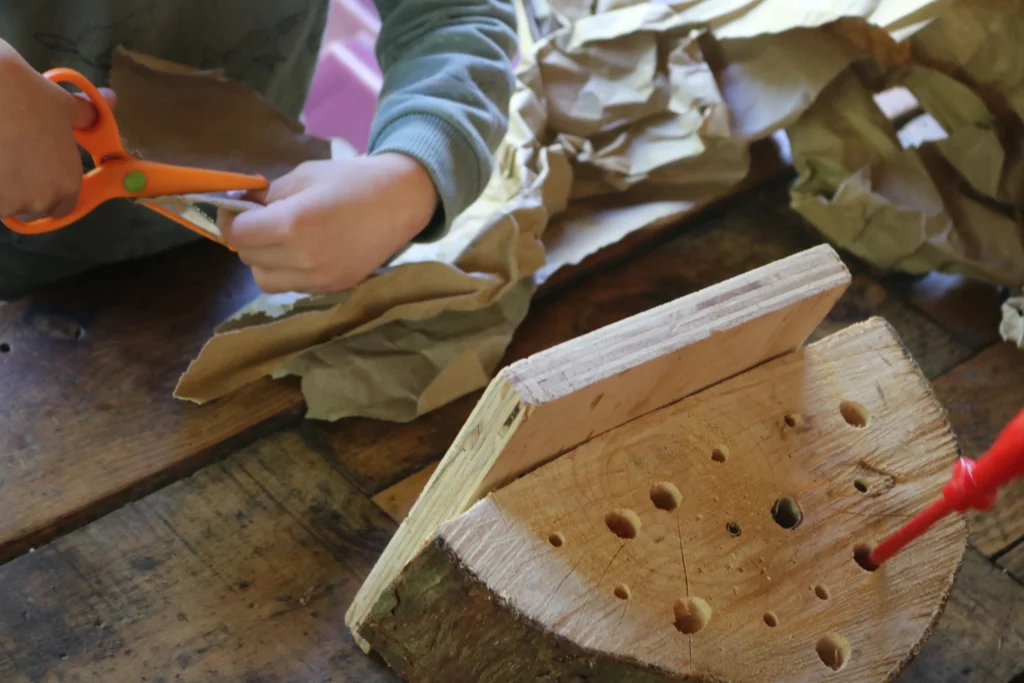
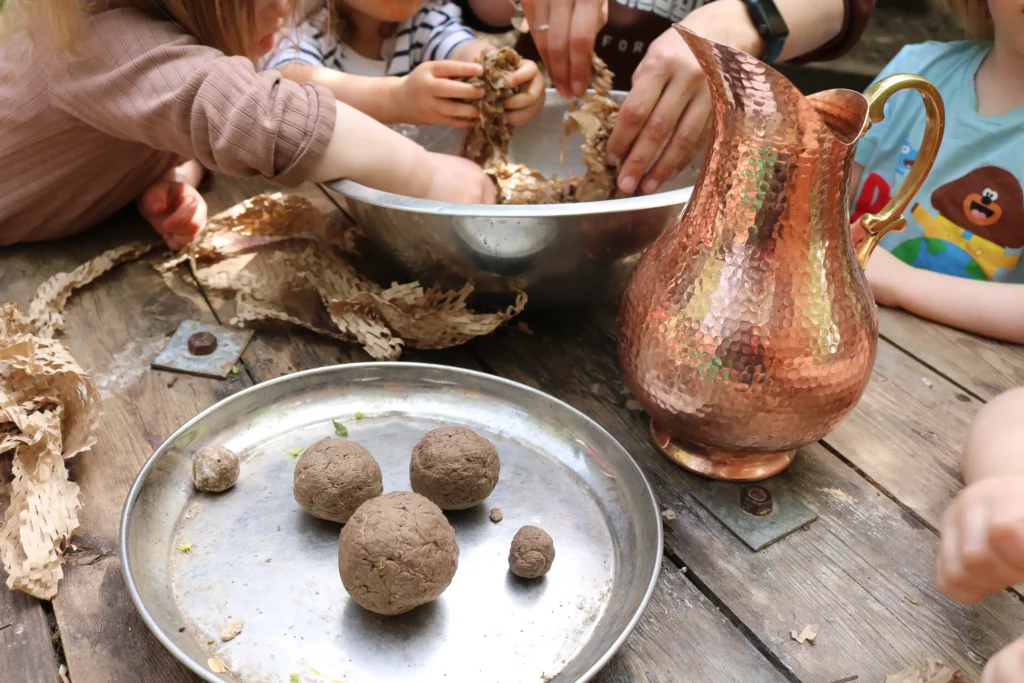
Children learn to work together
As children grow socially, loose parts naturally bring them together.
A plank that’s too heavy to carry alone becomes a reason to ask for help. A den that needs holding in place becomes a quiet lesson in cooperation. Sharing tends to happen more easily too, when there’s no single prized object to fight over.
Disputes arise, of course, but loose parts seem to invite compromise in a way that a coveted toy rarely does.